Print Page  |  Search     
Hello: Visitor  |  Login  |  My Account  |  Shopping Cart 
Bible Commentary

You are here: Home > Bible Commentary > Romans

Romans

Chapter 1
Chapter 2
Chapter 3
Chapter 4
Chapter 5
Chapter 6
Chapter 7
Chapter 8
Chapter 9
Chapter 10
Chapter 11
Chapter 12
Chapter 13
Chapter 14
Chapter 15
Chapter 16


Romans

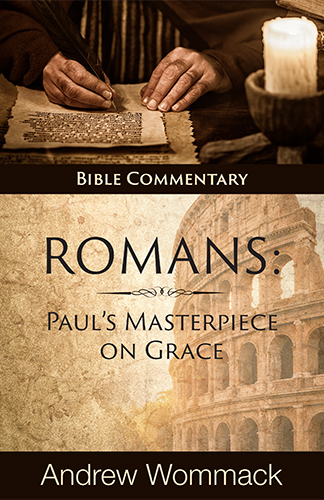
Introduction To The Book Of Romans

The book of Romans is the longest and the clearest exposé by the apostle Paul on the gospel. This book contains the doctrinal foundation for the Christian faith and it is for this reason that it was arranged first in order among the epistles of the New Testament. The truths presented here must be understood before proceeding to other doctrinal matters.

In this letter, Paul deals with a larger number of doctrinal issues than in any other of his epistles. His treatment of the doctrine of salvation by grace through faith is so masterfully done that its divine inspiration cannot be questioned. The depth in which Paul treats these great subjects shows that this knowledge was truly given to him by the direct revelation of God (Gal. 1:12).

An understanding of the truths in Romans 3 transformed Martin Luther's personal life and ignited the fires of the reformation that shook the world. Indeed, an understanding of the truths expressed in this book are essential not only to the salvation of every individual, but also to the maturing and success of every Christian.

Authorship
Paul is undoubtedly the author of the letter to the Romans. The first verse of this epistle clearly states so (Rom. 1:1). There is no dissenting opinion of this among the early writings of the church. The writer also sends greetings to Priscilla and Aquila (see note 2 at Acts 18:2), his helpers, and also to Timotheus, his workfellow (Rom. 16:21). The book of Acts confirms these were close workers with Paul.

The Recipients Of The Book Of Romans
Paul addressed this letter to all the Christians that were in Rome (Rom. 1:7). There is no scriptural account of any apostolic mission to take the gospel to Rome, so it may therefore be supposed that these Christians were converts from the day of Pentecost when the Holy Spirit was given (Acts 2:10), and the personal witness of believers as they traversed the empire.

These saints in Rome were a diverse group. There were Gentiles who had come from pagan worship to trust in Jesus as their Savior, and there were devout Jews who had believed in Jesus as the Jewish Messiah. This gave rise to many problems among the believers, which were aggravated no doubt, by the fact that no apostle had been to Rome to settle disputes and provide doctrinal teaching and guidance.

The Jewish Christians were adamant that the Gentiles had to convert to Judaism through the rite of circumcision. They lacked proper teaching in the revelation of grace that was given to Paul. Therefore, Paul felt an obligation, as the apostle to the gentiles (Rom. 11:13), to instruct them in these matters and hence, this letter.

Date And Place Of Writing
This letter to the Romans was probably written during Paul's third missionary trip around A.D. 57-58 when Paul was in Corinth or that vicinity (Acts 20:2-3).

The date can be deduced from some of Paul's statements in Rom. 15:25-28 about how he was headed to Jerusalem to take the offering of the saints in Macedonia (see note 1 at Acts 16:9) and Achaia (see note 11 at Acts 18:12) to the poor saints in Judaea (see note 1 at Jn. 4:3). This places the writing of this book towards the end of Paul's third missionary trip (see note 2 at Acts 18:23) as he headed for Jerusalem.

Phebe, a servant of the church in Cenchrea (see note 1 at Acts 18:18), was the one who carried this epistle to the church in Rome (Acts 16:1; subscript Acts 16:27). So, it can be supposed that Paul was in Phebe's home town of Cenchrea or Corinth (see note 1 at Acts 18:1) when he wrote this letter.

About The Author
Some facts about Paul's persecution of the church, his conversion, and the intervening time until the beginning of his ministry has been dealt with in note 4 at Acts 7:58; note 1 at Acts 9:1; and note 1 at Acts 9:26. Information about Paul's life after the close of the book of Acts is included in note 1 at Acts 28:30. Many notes about Paul's exploits, character and hardships are found through out the book of Acts.